
Are You Ready for a World Without Patriarchy?


For the sake of clarity, the reconciliation of differing views, and the advancement of understanding, I hold this conversation to be necessary.
I
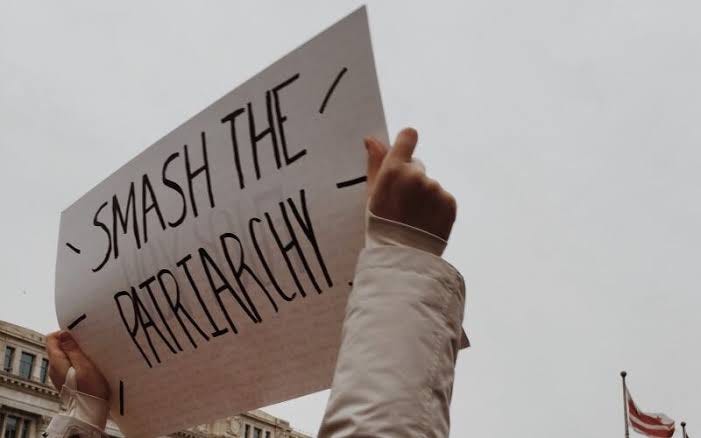
When activists declare their desire to dismantle the patriarchy, well-meaning sympathizers nod along enthusiastically. After all, who could oppose ending oppression? Who wouldn't want a world of genuine equality? But do these sympathizers have any idea what they're agreeing to? They probably think they're signing up for fairness when they might be endorsing a civilizational upheaval they cannot begin to fathom.
Last week I came across an essay, one I will attempt to summarize now:
A woman sits across from her date at dinner. The conversation drifts towards the comfortable territory of shared progressive values. She describes herself as a feminist. He nods. They both agree that gender roles are social constructs. Arbitrary. Oppressive. Products of a patriarchal system that humanity would do well to dismantle. Fine.
Then he asks a simple question: if they heard a disturbance outside their home, would she expect him to investigate?
Without hesitation, she says yes.
He asks why. She pauses. The intellectual scaffolding wobbles. Eventually, she lands on an answer - chivalry demands it. In her words, “this is literally the only time I benefit from patriarchy.
This date, one imagines, became rather interesting after that.
I believe this essay's author experiences what we might call a moment of philosophical vertigo. She realizes she maintains expectations of male behaviour she would condemn if reversed. When pressed, she acknowledges she could check the noise herself. She does exactly that when alone, so the capability exists. However, the willingness does not, at least when a man is present.
Her solution? Label it conditioning. Society has programmed her to expect male protection. She really cannot help these instincts. Oh they run too deep. The patriarchy installed them long before she developed critical consciousness. How clever. You can see how it transforms active choice into passive victimhood. She no longer bears responsibility for perpetuating the very system she claims to oppose. The patriarchy did this to her. She is merely responding to stimuli, a Pavlovian subject who salivates at the bell of traditional gender expectations.
But watch what happens when we apply this same logic to men. A man expects his partner to cook. He could cook for himself when single. The capability also exists. The expectation appears only when a woman enters the picture. Shall we call this conditioning? Shall we extend the same charitable interpretation? The essay suggests otherwise. His expectation represents entitlement. Hers represents socialization. His perpetuates oppression. Hers reflects understandable habit. The analytical framework shifts based solely on who benefits.
The Unspoken Architecture
Understanding how we arrived here requires examining the structure itself. Gender roles emerged as adaptive strategies in environments where survival demanded specialization. In societies with high infant mortality, limited medical technology, and resource scarcity, reproductive capacity shaped social organization. Women bore children at tremendous physical cost. Men absorbed different costs: early death in warfare, dangerous labour, physical sacrifice.
This arrangement as I have said represents a contract in the anthropological sense, that is, an implicit social agreement where parties exchanged specialized obligations. "I will risk my life in external threats; you will manage internal vulnerabilities." "I will hunt and die young doing it; you will transform that food into sustenance for children." Neither party authored this contract. Neither party signed it. Both parties inherited it as the price of group survival.
I understand that calling it a "contract" troubles some people. The word may imply voluntary agreement, and women throughout history lacked the autonomy to refuse. Fair enough. Call it instead an emergent arrangement that calcified into institutional power. Call it an adaptive strategy that outlived its usefulness. Call it evolutionary pressure that became a cultural prison. However, what you cannot call it is a conspiracy by average men against average women. The vast majority of men throughout history possessed zero political power. They were conscripted, worked to death, and discarded. A tiny elite of powerful men created systems that exploited everyone else along gendered lines. Those systems harmed both sexes, simply in different ways.
The structure persisted because it served powerful interests and because deviation from it meant death. Women who rejected their roles faced violence, social destruction, or literal execution. Men who rejected their roles faced the same. The system policed itself through both formal mechanisms (law, religion, economic control) and informal mechanisms (shame, ostracism, violence). This history matters because contemporary discussions treat patriarchy as a system where all men oppressed all women, when the more accurate description is: a small number of men oppressed everyone else using gender as one mechanism of control among many.
The Violence Gambit
The author is smart and thus anticipates objections to her selective adherence to gender roles. She offers a crucial distinction: women adapt peacefully to disappointment while men respond with violence. She will check the noise if he refuses. She will take the car to the mechanic herself. She will not beat him into compliance. She will not kill him over unmet expectations.
This argument sounds persuasive until you examine what it actually claims.
First, it generalizes from the worst examples of male behaviour to all men, while generalizing from typical female behaviour to all women. Yes, men commit violence over domestic disputes. Most do not. The vast majority of men whose expectations remain unmet simply adapt. They go to work. They suppress frustration. They handle things themselves. The male suicide rate, three to four times higher than the female rate, suggests men internalize disappointment rather more than they externalize it.
Second, it ignores that women organized the largest social movements of the twentieth century specifically because they refused to "just adapt." Suffragettes chained themselves to buildings. They went on hunger strikes. They demanded systemic change rather than individual accommodation. This was admirable. It was also the exact opposite of quietly getting up and doing things themselves. Women collectively rejected their assigned roles and fought, sometimes literally, to restructure society. Why then does this author ask men to do what women has historically refused to do?
Third, it defines violence narrowly enough to exclude the ways women enforce expectations. Obviously, physical strength differences make direct physical violence less common among women, though it certainly exists. But women also excel at other forms of coercion: social destruction, emotional manipulation, weaponizing institutions, parental alienation. These methods cause profound harm. They simply leave different scars. The "at least I won't beat you" standard sets the bar so low it scrapes the floor. Congratulations on not committing felony assault. Do you want a cookie?
The Infrastructure Problem
When we ask the destroyers of patriarchy what they are really saying, you realize they are not merely proposing to remove a set of unjust rules. They are proposing to demolish infrastructure. But of course they are not referring to physical infrastructure like roads and bridges, they refer to such things like the invisible scaffolding of expectations, assumptions, and behavioural patterns that have organized human life for millennia. You don't have to think this infrastructure is good or just to recognize that it is load-bearing. And when you remove load-bearing structures without replacement, things collapse. Do they not?
Wouldn't you agree that every stable society in recorded history has had some system for managing the fundamental asymmetry between men and women, namely, that women bear children and men do not. The specific solutions have varied wildly across cultures and epochs. Some have been brutal and unjust. Others have been more balanced. But all successful civilizations developed some answer to this basic coordination problem. Call these answers "patriarchy" if you like, though the term flattens important distinctions. The point remains that you cannot simply delete the answer without confronting the question it was attempting to solve.
What happens to marriage in a world without patriarchy? A fundamental institution that binds parents together for the rearing of children. What keeps fathers invested in children they could abandon without biological consequence? What prevents the atomization of society into isolated individuals negotiating temporary alliances? The traditional answer involved duty, honour, and social pressure, tools forged in the patriarchal framework. Perhaps you find these tools crude and unjust. Fine. But where are the replacements? Show me the blueprints.
The Privilege of Forgetting
Those most eager to dismantle patriarchy are often those whose lives depend most thoroughly on its lingering effects. The young woman who studies gender theory in perfect safety does so in a society where male violence is constrained by norms and institutions developed over centuries. She takes for granted that the roads are patrolled, that strangers will likely leave her unmolested, that if she calls for help someone will likely come. These are not natural states of affairs. They are in fact, achievements - hard-won and fragile.
I do not say this to justify historical injustices toward women. I say it to point out that order itself has a history, and that history is entangled with the very systems now being condemned wholesale. The question is not whether women suffered under patriarchy—of course they did. The question is whether the critics understand what actually prevented even greater suffering, and whether they can maintain those protective functions while discarding the unjust ones. A fatal weakness of revolutionary thinking is the assumption that the current moment is the neutral baseline, and that all previous structures were simply additions that can be removed to reveal a more natural state. But there is no natural state, is there? There is only the question of which artificial structures we maintain and which we redesign. Those who cannot distinguish between the two will destroy what they need while keeping what they should discard.
The Accountability Void
From the conversations I have had in the last few days, it is evident that whatever these activists are proposing, it admits no mechanism for self-correction. When patriarchy produces injustice, we can point to specific arrangements, specific laws, specific people and say "this is wrong; this must change." But when the dismantling of patriarchy produces chaos, confusion, or suffering, to whom can we appeal? The movement has no bishops, no hierarchy, no mechanism for distinguishing between the justified reforms and the destructive excesses.
Propose that boys need father figures, and you will be told this is patriarchal thinking. Suggest that society has legitimate interests in how children are raised, and you are imposing heteronormative structures. Express concern about the psychological impacts of family dissolution, and you are defending oppression. Every concern, every hesitation, every request for caution can be dismissed as the patriarchy's immune system fighting back against its own dissolution.
By refusing the possibility that any criticism might be valid, they ensure they cannot learn from their mistakes. This is exactly how ideologies become totalizing. Christianity could produce the Reformation because it could admit it had erred. Science can progress because it can admit previous theories were wrong. But how does a movement self-correct when its fundamental premise is that all opposition stems from the very evil it seeks to destroy?
Let us now engage in a thought experiment. Imagine we succeed. Imagine that tomorrow, all vestiges of patriarchy vanish. Every expectation that men should protect. Every assumption that fathers should provide. Every social pressure that binds men to the children they father. Every norm that makes masculine strength a resource for the community rather than a threat to it. All gone.
Now what?
Do you imagine women become safer or more vulnerable? Do you think children thrive better or worse? Does society become more cohesive or more fractured? The honest answer is nobody knows. We are running an experiment on a civilizational scale with no control group and no way to reverse course if we fail.
Some will argue that women can protect themselves, that communities can organize without masculine strength, that children can flourish in any configuration of caregivers. Perhaps. But "perhaps" is a thin foundation for dismantling systems that, for all their flaws, actually existed and actually functioned. You cannot eat perhaps. You cannot shelter a child with perhaps. You cannot build a civilization on perhaps.
Let's hear what Vogel thinks.
II
I admit, Adeseto has done quite a fine job here. So much that I don't think there would be much for myself to add without steering the pot a little bit too wildly. When I first read that article, I left away feeling burnt and disappointed, wondering, how of course, a woman who has built a meta-modest number of followers surrounding her ideology, had never taken the time to ask herself such a simple question as what the man she was supposedly on a date with asked.
Why was that the first time she was coming across that? Is it an echo chamber phenomenon, or just the incapacity to think of objections to her world changing ideas about sex and gender roles? Short to say, but I found it all a waste of time to talk about, almost as much as it was a waste of time to read. But here we are, for the reason that Adeseto found me, Vogel, the perfect person to add to his article on it.
An article like that, deserves to be shoved. It barely even surfaces as good feminist literature, and less so as literature at all. And I will categorize it as what an aficionado of these have managed to put as a label to it: "Twitter Woman Babble."
Still, I will put down my thoughts on it.
I think it is not hidden that feminism has a problem. It has a problem of definition. One might think that a problem of definition is no problem at all, except for autists like myself who labour themselves about correct meanings. One might say, well, if the ideology is correcting real life issues, then a crises of meaning and definition is nothing.
That is a far cry from the truth of it all. A clear concise definition makes sure that when there is an argument about feminism, people know what they are talking and arguing about. This is a problem most of the time. Because clearly the things feminists usually concern themselves with, have nothing to do with equal rights, if you would go with the formal definition that feminism is a push for the equality of sexes in the political, social, and economic spheres of human life, which must include rights. What feminism has showed itself to be everytime it's not trying to play lip service, is a movement that merely just concerns itself with the well being of women as they take it to be, in the social, political, and economic spheres of life.
Of course this is not a bad thing. Women actually voicing out their concerns for their well-being in the public space, to better their lot, is not bad. And for this to happen we need more educated women, more political women, more brave women. Because men do not understand the affairs and inner tinkerings of women enough in order to make and effect policies that are concerned with the well being of women. So there has to be an equality of opportunity and law for all women to be able to pursue these things. This is sane.
The inconsistencies of feminism stems from its implied aims and concerns, in clashes with its formal definition. Well Being vs. Equality. What value is equality to well being, if equality can mean both parties equally being grinded to dust, women being condemned as disposable as men to war, and men saying that they no longer want to adhere to these "oppressive gender roles"and the duties that come with them? Equality on its own is indifferent to well being.
What Happens After Patriarchy?
The patriarchy when defined by feminists seeking to be consistent with the definition of feminism, and to keep in line with their ethos of dismantling it, is a social order where primary power is in the hands of men who systematically dominate women in the political, economical, and social life. It must be noted here that this definition in itself doesn't imply that the patriarchy is corrosive to the well being of women. The only way it actually is, is that it leaves very little space in public matters to voice the concerns of women on issues that would affect them, and also leaves a lot of women under the control of men who do not understand women.
But from the article of interest, we can tell that the author clearly thinks a man doing his gendered duty when she is with him actually does add to her well being. A man must be the body guard, a man must ask first for a date, a man must carry all the heavy things, a man must fight, a man must...
I have had a few chats with some feminist friends of mine about the talk of 50/50 from many modern men who want to go into relationships. And they tell me that in every relationship between men and women, it is usually a fact that the woman—still being a woman—still bears risks, imposed on her by her own biochemistry, from pregnancy to menstrual cramps, and many female maladies, and so should not be expected to do a 50/50 relationship. They already pay quite a lot to still be expected of this.
And this is not a fringe talking point. It is an accepted one by many feminists. In this you see that they are not exactly ready for the disposal of gender roles. At best what you see here are people who pay lip service to the destruction of the patriarchy but still want the effects of it on the well being of women.
The expectation is that the man is obligated to spend his money on the woman and the house hold, still obligated to share the chores, while the woman keeps her money—if she decides to work—for herself.
The orchestrators of this, happened to not have foreseen some lose ends. Which is that they thought men themselves must be incredibly rule following people who don't want freedom in their lives, and like being caged up in boxes just to serve the whims of women. Thus we see men themed movements recently who intend to counter this arrangement.
Every day the number of these sort of men grow. Men who don't want to play by these rules. Men who have made the only worthy thing to them from their female counter parts to be sex, and nothing more. People whose idea of breaking out of fixed gender roles, is not to act or dress as gay as possible, but not being the nice guy, not trying to be the father who works to provide, not being the man who breaks his back at work just to come back to his family, but a man that doesn't care for anything else but himself, and does things for himself only. He is not willing to die for his country, not his nation, he doesn't have a family to call his to die for. He is not really aiming for any positions in government or his community.
The dissolution of gender roles and patriarchy, as we have seen, must come with these problems. And from what I can tell so far we are not ready for a world without patriarchy. You can tell from the clauses made by feminists concerning it. All the excuses to not be held equally responsible.
Supposed Risks
The author of the article of interest made an interesting point that Adeseto highlights. She noted that while men will not risk much if they say no to being told to do some of their duties as men, that women have been killed for not cooking, for not wanting to have a child, for not wearing particular clothes—of course she implied these even though she did not outright say it.
I find it an odd take to make. For one, why do you think your and society's stance on gender roles could stop a man from killing you if you said no to cooking a meal for him? This was the part of the article I considered incredibly bizarre. I couldn't bring myself to actually see what she was trying to get to.
"Cook for me."
"I don't want to. I am a feminist and I don't believe in gender roles."
"Oh you are? I was about to kill you but because we live in a world where there is no fixed gender roles, I wouldn't."
Would the dissolution of gender roles save you from being killed? Did the patriarchy and gender roles mandate the killing of women who don't cook? Will the patriarchy not send men to jail and even most possibly sentence him to Capital punishment if they do that? Or isn't it the temperament of the man in question the one culprit of the killing of the woman?
Why was that a point to be made? I am not really sure. I would like an answer, no doubt.
if you can comfortably get married or date a man that you think could kill you if you say no to him, what is the point of your belief or lack thereof of gender roles.
I believe that the most sensible thing to do for women who absolutely reject the patriarchy, is to leave the patriarchy, date women, and live with them. There is a land in Arizona America that already exists for that. It's called Womyn Land. I am not so certain why it's not a popular place.
The Question
Are you ready for a world without patriarchy? Are you ready for a world without male disposability? Are you ready for the social chaos that emerges when male energy is no longer channeled into productive purposes? Are you ready for women to discover that the independence they cherish was built on the foundation of male restraint, and that restraint was maintained by the very systems now being destroyed?
I suspect most people are not ready. I suspect they imagine that all the good things will remain while only the bad things disappear. But this is magical thinking. It is the belief that you can have order without hierarchy, civilization without constraint, freedom without responsibility, rights without duties. It is the belief that human nature itself will transform to accommodate our ideological preferences.
Do you know what happens when you organize society around pure negation? When your only principle is opposition to what existed before, you build nothing coherent. You create only anxiety, resentment, and confusion. Men don't know what is expected of them. Women don't know what they should expect. Children grow up in a world of mixed signals and absent fathers. And everyone is angry—angry at the system, angry at each other, angry at themselves for not living up to ideals that change faster than anyone can track.
So no, I do not think most people are ready for a world without patriarchy. They are not ready because they have not seriously contemplated what such a world would actually entail. They have only imagined a world where all the injustices they dislike have vanished, while all the comforts they take for granted somehow remain.
The world does not work that way. You cannot selectively delete the parts of civilization you dislike while keeping the parts you enjoy. Everything is connected. Pull one thread and the whole system unravels. Why then should we trust people who refuse to acknowledge what they are changing, or who have no plan beyond destruction?
 | A guest post by
|
you provoked a first-ever comment on a substack article out of me and it’s because i actually lost a brain cell reading this. what the fuck is this oversimplification of harm women face and then the turn around to intellectualizing a fuckass system just because it has a “structure?”
the same structure that has fallen apart or which one?
It is particularly repugnant when an intelligent individual leverages their eloquence not to unlearn or fight against bias, but to curate a psuedo intellectualized defense of it.
I wonder how many feminists and women those you mock stealthily or not with this condescending balderdash will see that even those they deem “intelligent” will bend a knee when it comes to defending patriarchy.
Pretzeling, going 2 for 2, in your grandeur and insistence to not introspect or question why you have such visceral reaction to a paragraph of her essay when the other half she openly states is serious is backed by century long research.
You speak on violence met upon men, who set the system up?
What do you think feminists are fighting against.
Fighting for an order and expecting gratitude that what exactly?
How distasteful and embarrassing.
Good luck